
Compare FPGA, CPU and GPU on latency, determinism, power and unit cost. See which platform fits AI inference, broadcast encoding, trading or control.
FPGA vs GPU vs CPU: Latency, Power and Cost

The short answer:
FPGA vs GPU vs CPU
- Use a CPU for general software and control logic.
- Use a GPU when you need throughput on large uniform batches.
- Use an FPGA when the worst case matters more than the average.
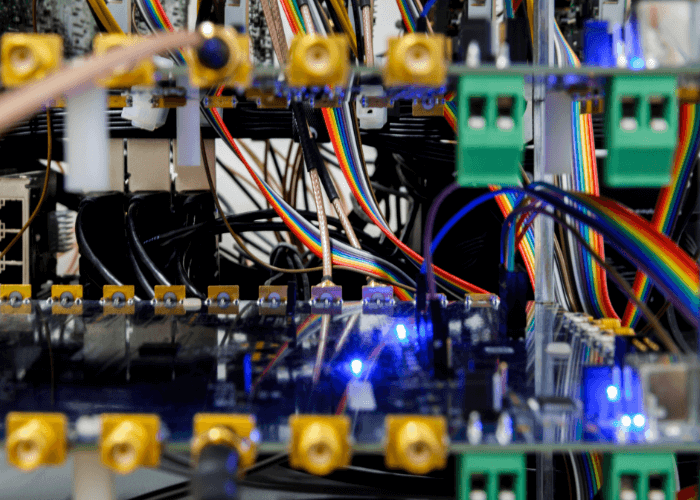
FPGA vs GPU vs CPU side-by-side comparison
| CPU | GPU | FPGA | |
|---|---|---|---|
| Execution model | Instructions, one after another | Thousands of identical operations, in batches | Circuits you define, all running at once |
| Typical latency | Milliseconds, variable | Batch-dependent, variable | Nanoseconds to microseconds, fixed |
| Deterministic? | No. Operating system, cache and interrupts | No. Driver stack and batching | Yes, by construction |
| Typical power | 15 to 150 W | 75 to 700 W | 1 to 50 W |
| I/O flexibility | Fixed interfaces | Mainly the memory bus | Any interface you need |
| Time to first result | Hours | Days | Weeks |
| Unit cost at volume | Low | High | Medium. Move to an ASIC above roughly 10,000 units |
| Best for | General software and control logic | Large uniform batches, model training | Hard deadlines, custom datapaths, streaming |
How the FPGA, GPU, and CPU actually differ
- A CPU executes instructions one at a time from memory.
- A GPU runs thousands of identical operations at once, in batches.
- An FPGA becomes the circuit you describe, so your logic runs as physical hardware.
- That last difference is the one that matters most.
- A CPU and a GPU both run your work on fixed silicon designed for someone else.
- An FPGA takes the shape of your problem.
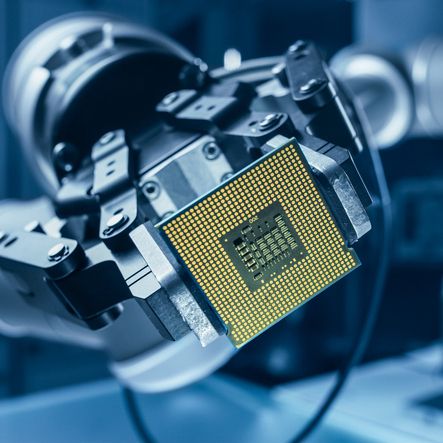
FPGA vs GPU for AI and deep learning
GPUs are the right answer for training neural networks. The workload is large, uniform and batch-friendly, which is exactly what GPU architecture rewards. Inference is a different question. When a decision has to land within a fixed deadline, batching works against you.
FPGAs process each sample as it arrives, so latency stays low and predictable.
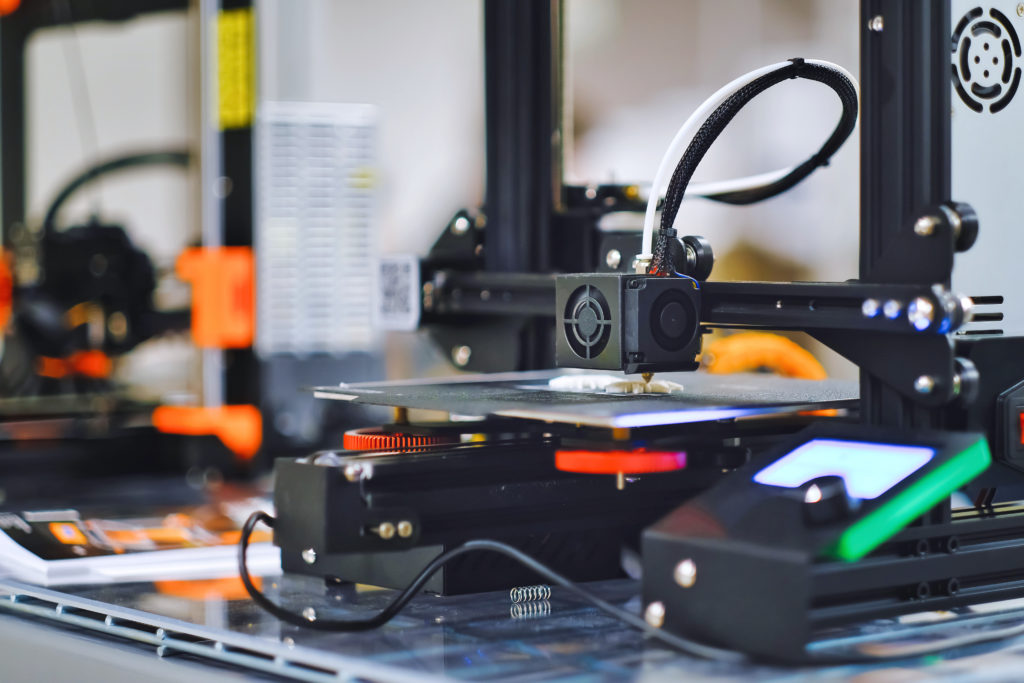
FPGA vs GPU for video encoding and broadcast
- Live video encoding punishes jitter more than raw speed.
- A GPU is fast on average, but its batching and driver stack make each frame’s delay vary.
- An FPGA streams frames through a fixed pipeline. Every frame takes the same number of clock cycles, so broadcast timing stays inside its budget.
FPGA vs CPU and GPU for low-latency trading
- In trading the worst case costs money, not the average.
- A CPU path runs through the operating system, so tail latency is unpredictable.
- An FPGA moves data from wire to decision in hardware, with no scheduler in the way. We have delivered EtherCAT links at 500 nanoseconds end to end.

FPGA for real-time control
Control loops need a guarantee, not a good average. Miss a deadline and the system fails, however fast it usually runs.
For TOmCAT we held a 3 microsecond deadline at 5000 frames per second, across the full pipeline, with no misses.
Power consumption compared
- An FPGA only implements the logic your application needs. There is no instruction decoder, no cache hierarchy and no scheduler drawing power in the background. For a fixed workload that usually means a large gap in total draw.
- A discrete GPU rarely idles below about 20 watts, and a busy one can pull several hundred. That rules it out of most embedded and battery-powered designs before performance even enters the discussion.
- But the honest picture is more specific than one platform winning. On dense matrix maths at full utilisation, a modern GPU is very efficient per operation. If your workload keeps it saturated, it competes well.
- The FPGA advantage shows up on two other measures. The first is latency per watt, where a fixed pipeline beats a batching architecture. The second is absolute power, where a design in the single-watt range is achievable and a GPU simply cannot go there.
- So ask which number constrains your product. If it is operations per joule at full load, compare carefully.
- If it is a hard power ceiling or a latency budget, the FPGA answer is usually clear.
When both GPU and FPGA are the wrong choice
- An FPGA is the wrong choice for general software. If your problem is a program rather than a datapath, a CPU will do it faster to build and cheaper to maintain.
- It is also wrong when development time dominates the budget. FPGA design takes weeks where software takes hours, so a one-off tool or a short experiment rarely justifies it.
- And it is the wrong choice for training large models. That workload is exactly what GPUs were built for, and you will not beat them at it.
- A CPU is the wrong choice when you need a guaranteed deadline. The operating system, the cache and the interrupt handlers all make the worst case unpredictable, however fast the average looks.
- It also struggles when the work is genuinely parallel. Adding cores helps, but not the way thousands of concurrent circuits or shader units do.
- A GPU is the wrong choice when each sample has its own deadline. Batching is where the efficiency comes from, and batching is what adds delay.
- It is also wrong for custom interfaces and tight power budgets. Its I/O is built around the memory bus, so unusual sensors and protocols mean extra hardware anyway.
Frequently asked questions
How does FPGA-based hardware encoding compare to CPU and GPU encoding in power consumption?
An FPGA implements only the encoding logic itself, so it draws no power on general-purpose machinery it never uses. A discrete GPU rarely idles below about 20 watts and a busy one pulls several hundred. A CPU sits between the two. For a fixed encoding workload, the FPGA typically runs at a fraction of the GPU figure.
What are the latency advantages of FPGA encoding compared to GPU-based software encoding?
A GPU gets its speed from batching, and batching adds delay to every frame. An FPGA streams each frame through a fixed pipeline instead. The average may look similar on paper, but the FPGA’s worst case is far tighter, which is what live broadcast and contribution feeds actually need.
How does FPGA encoding handle deterministic latency vs non-deterministic GPU processing?
Deterministic means every frame takes the same number of clock cycles, every time. An FPGA guarantees that because the circuit is fixed. A GPU shares its resources between kernels, drivers and batches, so frame delay varies. If your timing budget is a hard limit rather than a target, that variation is the problem.
What is the difference between an FPGA and a GPU?
A GPU is fixed silicon that runs your work in large parallel batches. An FPGA is reconfigurable logic that becomes the circuit you describe. GPUs win on raw throughput for uniform maths. FPGAs win on latency, determinism, power and custom interfaces.
Can an FPGA replace a CPU?
Not for general software. You can build a processor inside an FPGA, and many designs do exactly that for control logic. But running an operating system and ordinary applications is what CPUs are good at, and an FPGA is a poor substitute.
Which should I choose for my application?
Start with your constraint. If it is a hard deadline or a power ceiling, choose an FPGA. If it is throughput on large uniform batches, choose a GPU. If it is development speed and flexibility, choose a CPU. Most real systems use more than one. QBayLogic designs FPGA systems for exactly these cases, from 3 microsecond deadlines at 5000 frames per second to EtherCAT links at 500 nanoseconds.

Get in touch for more information on FPGA vs GPU
Christiaan Baaij, PhD
Call me on +31 (0)6 1602 2536