
Axign – Audio chips for consumer electronics
Unlocking the next generation of audio chips with Axign and QBayLogic.

Discover how innovation meets precision in the world of cyber-physical systems with CAES, University of Twente and QBayLogic.

In cyber-physical systems, timing is everything. Controllers must deliver results within strict deadlines, demanding designs with predictable delays. This need for precision led to a fascinating challenge: the Tunneling Ball Device, an example filled with elements typical of cyber-physical systems:
Achieving this delicate balance, accurately adjusting the disc’s trajectory within a tight timeframe as steel balls descend over a few decimeters, demands high-speed, hard real-time control. It’s the harmonious convergence of computation and physics, a hallmark of the cyber-physical systems landscape.
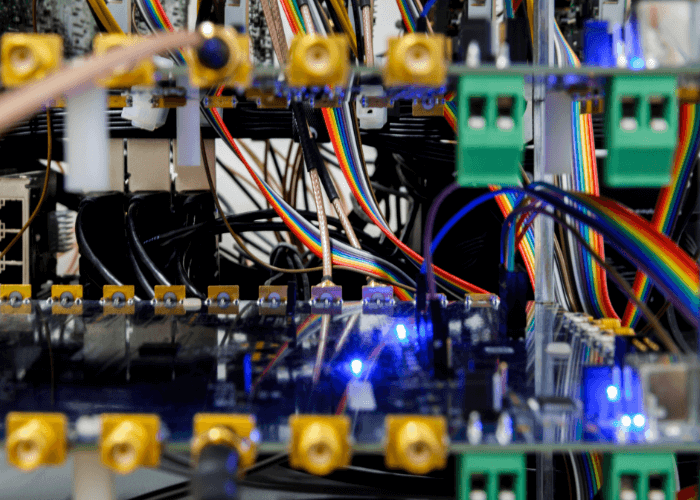
QBayLogic collaborated with the CAES group from the University of Twente on this project. Utilizing Clash and its reliable working methodology, we devised a solution that surpassed challenges. Clash’s executable Haskell code facilitated incremental development, making it possible to verify behavior and properties at each stage. The language’s proper structure ensured the hardware design remained true to the original code.

The proof is in the results. Thanks to Clash, the team seamlessly transitioned from specification to implementation while maintaining confidence in the design’s soundness. Clash’s advanced parameterization and compile-time computation enhanced code reuse, adaptability, and clarity without compromising performance.
This project showcased Clash’s remarkable aptness for designing control systems in cyber-physical environments.




QBayLogic brought a unique tool to the table: Clash, a hardware description language. Clash is more than code; it’s a powerful tool for driving innovation. It allows for incremental development, testing as a computer program, and smooth transitions to functional hardware designs. What sets our approach apart is that the final hardware product is a refined version of the original code, not a mere re-implementation.
This project exemplifies our commitment to pushing the boundaries of what is possible in the realm of cyber-physical systems. Applications where the applied expertise would also fit:
Unlocking the next generation of audio chips with Axign and QBayLogic.
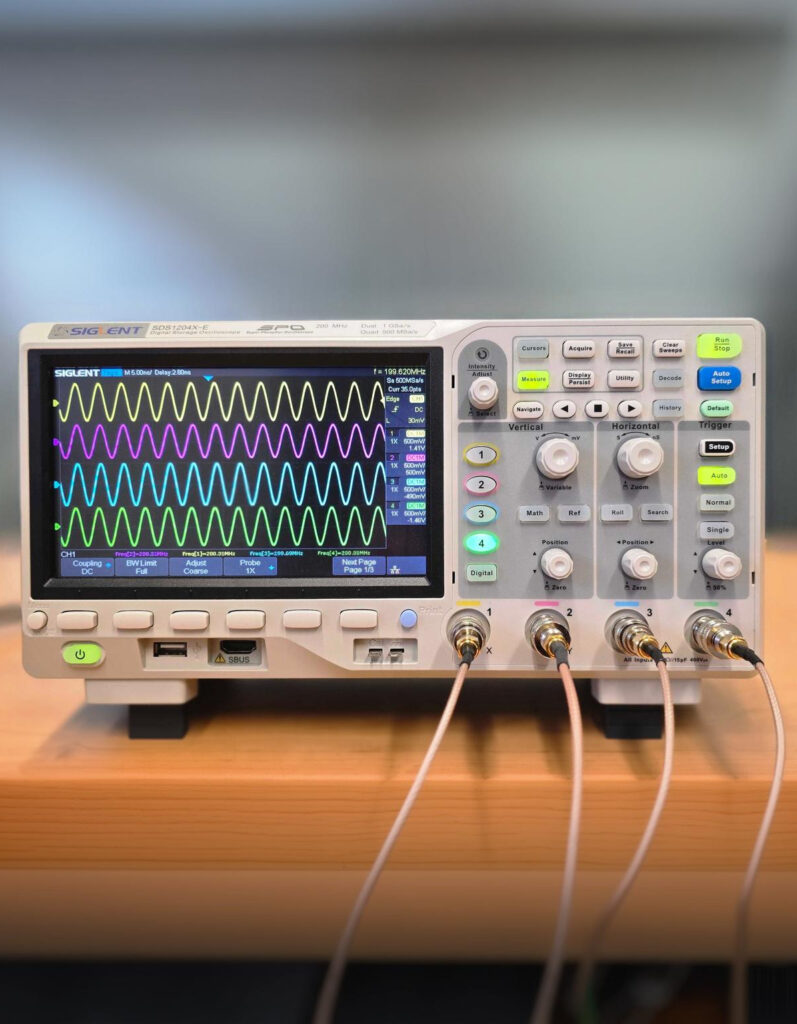
Discover how Google is revolutionizing data centers with QBayLogic!

The Formal Verification Clash: feel the synergy between functional programming, proofs and functional hardware design.